Don’t Be So
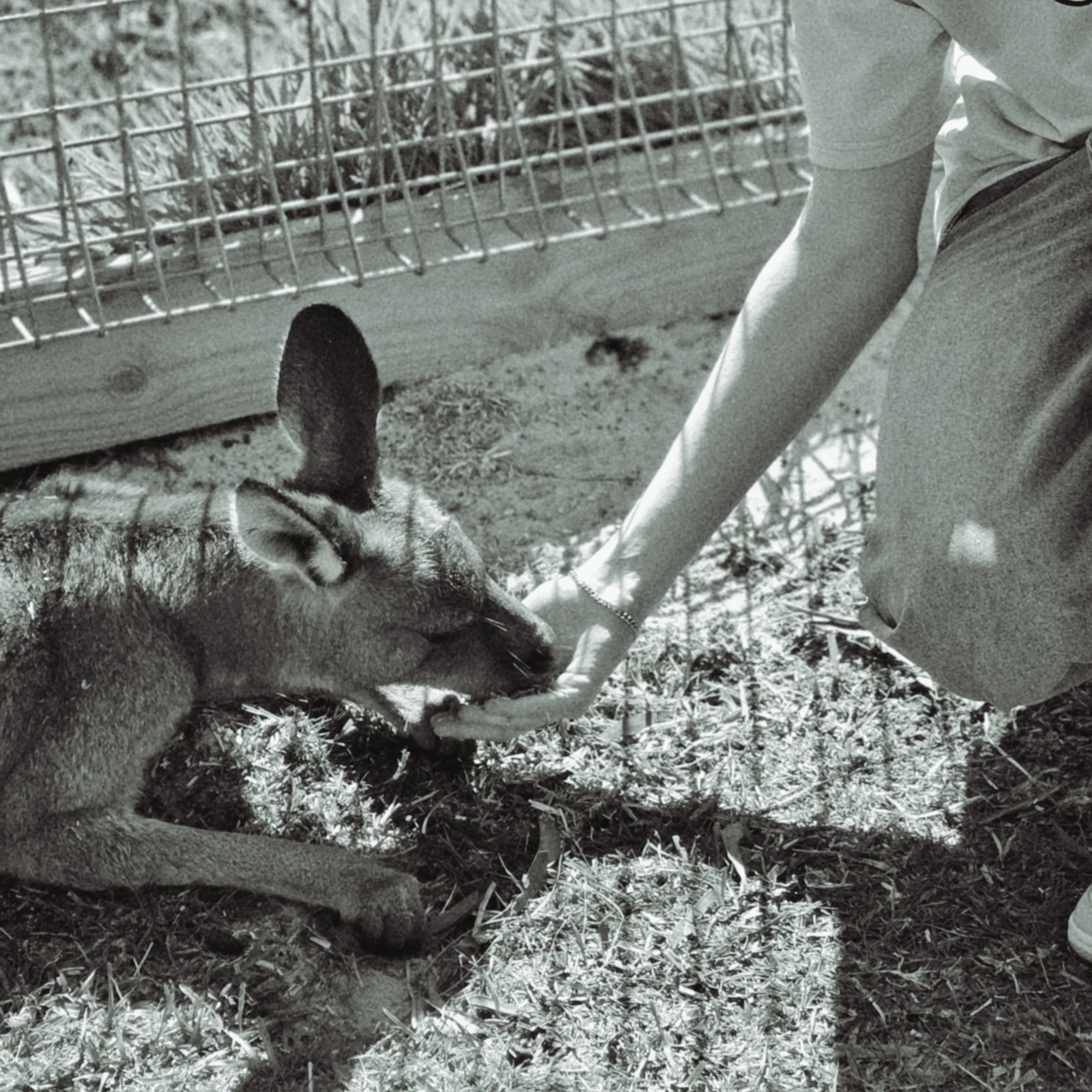
What is love? Religions, cultures, and individuals certainly have many answers to that question. Most seem to revolve around permanence: the idea that love survives the test of time in a way ordinary experiences do not. We are taught to think of love as something that lasts, something that withstands change, distance, hardship, and age. If it ends, we are often tempted to look backward and wonder whether it was ever real at all. I have come to think that this way of understanding love misses something important. Love does not need to be permanent to be genuine, and the end of a relationship does not retroactively erase what existed within it.
In September of 2025, I landed in Sydney with what felt like an entire life ahead of me. Most of what I knew about Australia came either from Forza Horizon 3 or from watching Australian Parliament in session. I also had a guy I had met online, someone I had fallen in love with over the summer from across an ocean, and who had fallen in love with me. We would spend hours each day talking about almost anything, but especially philosophy and politics. By the time I boarded the plane to Australia, he was already deeply woven into my life, despite the fact that we had never actually occupied the same physical space.
When I landed in Sydney, he was waiting for me beyond immigration while I stressed over the possibility that Australian customs might confiscate my Lucky Charms bars. To my immense relief, they survived. After locking eyes for a moment, we left the terminal and found his dad waiting outside in a massive Australian ute with the whole setup: snorkel, off-road tires, and a front guard bar. We sat together somewhat awkwardly as his dad maneuvered through late-night Sydney traffic toward their home, where I would stay while I got my bearings. Eventually, we arrived. I cleaned myself up, got settled, and almost immediately asked whether I could try driving on the left side of the road. His dad said yes, so despite having just traveled across the world, we headed back out into the Sydney night.
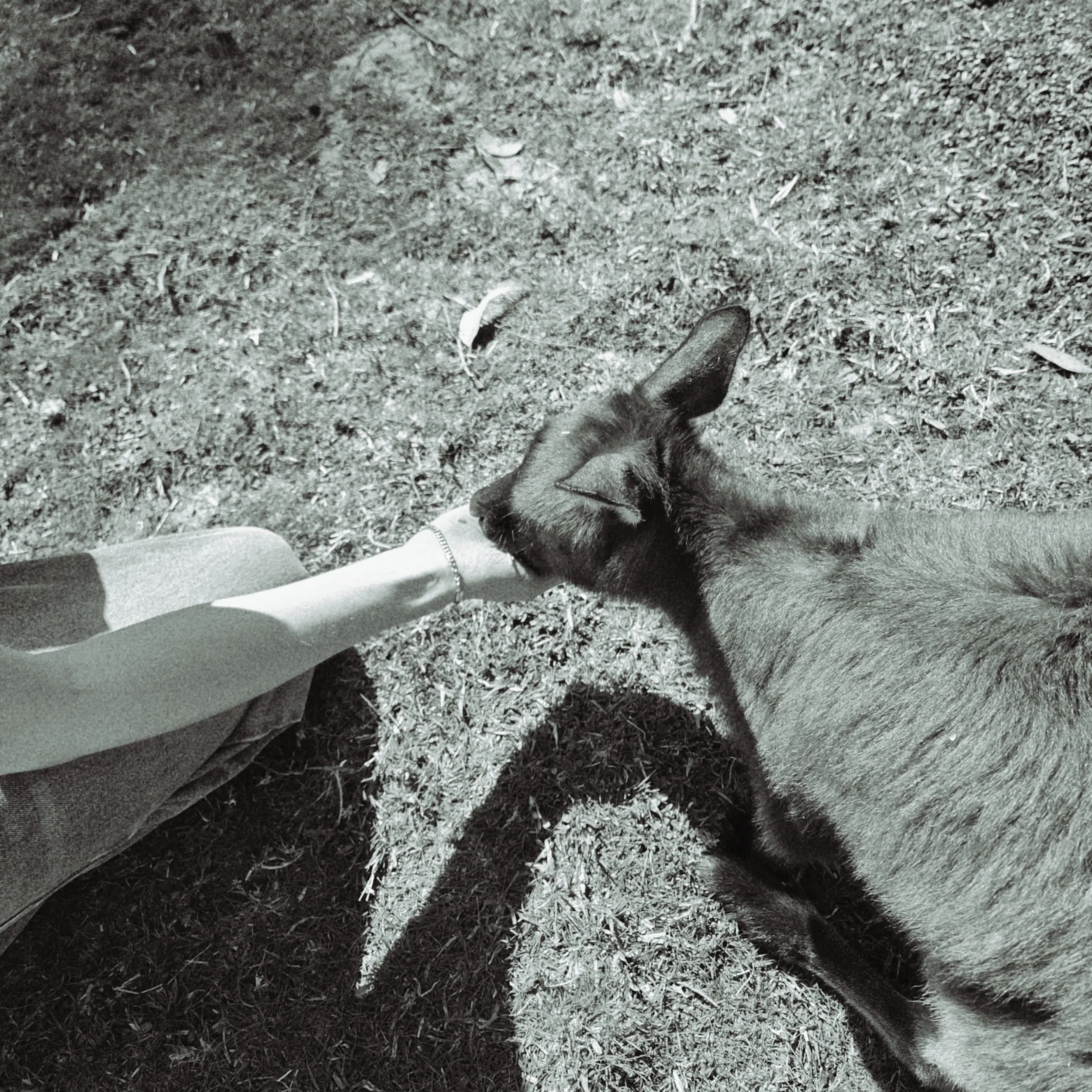
That was also when I encountered one of my greatest Australian fears: flying foxes, huge and dreadful creatures hanging in the trees above us. I remain convinced there is something fundamentally wrong with an animal that large being allowed to fly. We climbed into the Mitsubishi Challenger, and I started driving around Maroubra, trying to train my brain to understand that roundabouts now moved clockwise. Every instinct I had developed from driving in the United States suddenly felt wrong. I had to think about almost every movement: stay left, look right, go clockwise around the roundabout, and do not drift into the wrong lane. It took an absurd amount of concentration, but somewhere in the middle of all that nervous driving, unfamiliar road signs, strange storefronts, flying foxes, laughter, and wonder, whatever had existed between us online became unmistakably real. I loved him, and in that moment I loved where I was.
That experience, driving around Sydney on the edge of my seat, marveling at new road signs, new storefronts, and new creatures while sitting beside someone already so ingrained in my life, is over. Yet it still lives within me today. The Mitsubishi itself died later in 2025 while we were traveling to Canberra. My nervousness about driving on the left eventually disappeared entirely. What once required intense concentration became muscle memory, and by the end of my time in Australia, getting behind the wheel felt ordinary. The relationship changed too. Something that had once been so central to the William of that time eventually ended in 2026. But that moment was real. It was real then, and it is real now.
I think we sometimes misunderstand love because we judge it by what eventually happens to it. A relationship that lasts a lifetime becomes evidence of true love, while a relationship that ends is often treated as a failure. We ask what went wrong. We say that someone wasted their time. Sometimes people even begin questioning whether they ever loved the other person at all. I no longer think permanence is what makes love real. In fact, nothing about human life is permanent. Every experience ends. Every place we live eventually becomes somewhere we used to live. Every ordinary afternoon becomes a memory. Every friendship changes, and every relationship changes. Even those who find the person they remain beside for the rest of their lives eventually lose them, because a lifetime itself is finite. Death ensures that even the most enduring love stories eventually come to an end.
That sounds depressing at first, but I do not think it is. There is something liberating about accepting that moments are finite. If we stop demanding that something last forever before we allow ourselves to call it meaningful, we become capable of appreciating what is actually happening while it is happening. I will never experience driving on the left side of the road for the first time again. I will probably never again be shocked by seeing my first giant flying fox, although I will absolutely still run and scream if one screeches at me from a tree overhead. I will never again walk through immigration at Sydney Airport and see his face waiting for me. Those moments ended, but they still happened. The fact that something ends does not erase everything that came before it.

Love can be temporary without being false. The commitment can end, the relationship can end, and the person can leave your life. You can even become strangers again. But the experience of loving someone remains a fact about your existence. You once cared about another person enough that their happiness became connected to your own. You trusted them, shared your time with them, and built memories together. Those things do not become imaginary simply because the future changed. Even after a relationship ends, traces of it remain everywhere. They exist in habits you picked up, places you associate with certain memories, songs you cannot hear without being transported somewhere else, jokes that no longer have an audience, and photographs that preserve people exactly as they were. They exist in who you became because another person briefly walked beside you.
I still ideally want what so many other people want. I want someone with whom I can build a life. I want permanence, even while knowing that permanence is ultimately impossible. But I no longer think forever is the standard by which love should be judged. Maybe the better measure is whether you were truly there, whether for however long it lasted you allowed yourself to know another person and allowed them to know you, whether you noticed them sitting beside you, and whether you understood that the ordinary moments would someday become the ones you missed. Love asks something strangely reckless of us because it asks us to become attached to people we cannot keep forever. Maybe that is not a flaw in love. Maybe that is precisely what gives it meaning.
Nothing lasts forever, not an experience, not a relationship, not even a life. The moments end. That does not mean they failed, and it certainly does not mean they were not real.
