Brandmauer
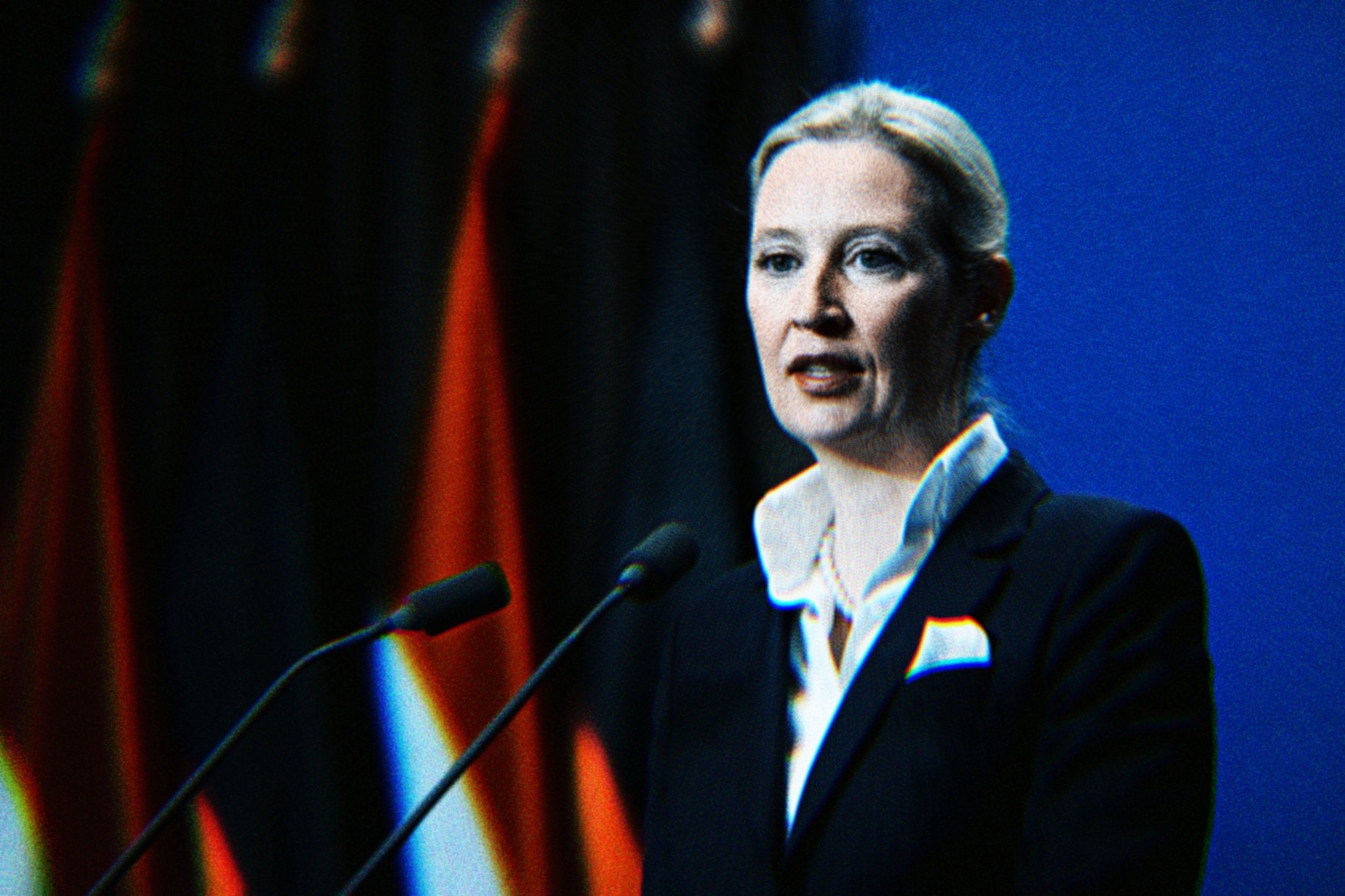
Dr. Alice Weidel, co-leader of the Alternative for Germany (AfD)
Germany’s political class is reeling from consecutive victories by the Alternative for Germany (AfD) in two states of the former East Germany. In Saxony-Anhalt, the AfD won 43.8% of the vote, while the CDU secured only 17.2%. The AfD won 39 of the state parliament’s 83 seats, leaving it just short of an outright majority. The CDU, Germany’s traditional center-right party and the party that had previously led the state government, was decisively defeated. Whatever government eventually emerges, there is really no question about who won the election. The AfD did, and by an enormous margin.
This brings us to Germany’s “firewall,” the policy among the country’s established political parties of refusing to enter into governing coalitions with the AfD. Supporters of the firewall argue that the AfD is too extreme to be allowed into government, often pointing to Germany’s history and the responsibility of democratic parties to prevent extremist movements from gaining institutional power. I understand the reasoning behind that argument. I also increasingly believe the policy is unsustainable. The problem with the firewall is that it was much easier to maintain when the AfD was a smaller protest party sitting around the edges of German politics. It becomes considerably harder to justify when more than four in ten voters in a state cast their ballots for that party. At some point, refusing to negotiate with the clear winner of an election stops looking like an effective way of containing the AfD and begins looking, particularly to its voters, like an effort to keep their votes from having any meaningful influence over government.
The elections held September 20 made the broader problem even clearer. In Berlin, Die Linke became the largest party for the first time, winning 25.7% of the vote after campaigning heavily on the housing crisis and supporting the nationalization of large private housing companies. In Mecklenburg-Western Pomerania, meanwhile, the AfD won 37.9%, while Chancellor Friedrich Merz’s CDU collapsed to 4.9%, its worst result in a German state election since World War II. These are not isolated electoral accidents anymore. German voters are moving away from the traditional political center, both toward the left and toward the right, while the parties that once dominated German politics are losing ground.
When a party clearly wins an election, as the AfD did in Saxony-Anhalt, I believe the democratic response should be to allow that party the opportunity to negotiate for government. The same principle applies to Die Linke's win in Berlin. That does not mean other parties must surrender their values, accept every AfD policy, or give the AfD unchecked power. Quite the opposite, coalition government is negotiation. A CDU-AfD government, for example, would require both parties to compromise, and the CDU would have an opportunity to restrain some of the AfD’s more extreme proposals in exchange for allowing AfD voters meaningful representation in government. There is also a practical political reason to reconsider the firewall. Shutting the AfD out indefinitely does not make its voters disappear. If anything, every election in which the AfD wins but is prevented from governing gives the party another argument to make to frustrated voters: that voting for the AfD is not enough because the political establishment will simply unite against them regardless of the result.
What happens when 43.8% becomes 46%? What happens when 46% becomes 49%? Eventually, a firewall designed to prevent the AfD from entering government could help create the conditions for the AfD to govern without needing anyone else at all. That is why I think entering into a coalition with the AfD when it clearly wins an election can be both more democratic and more politically responsible than permanent exclusion. It gives voters representation, forces the AfD to take responsibility for governing rather than permanently campaigning against the establishment, and gives other parties leverage over what policies actually become law.
None of this requires pretending that every AfD position is moderate or harmless. There are legitimate reasons why many Germans are deeply uncomfortable with parts of the party and its leadership. But democracy cannot function indefinitely by telling an increasingly large section of the electorate that their preferred party may participate in elections but can never participate in government. Germany’s political class can continue building coalitions whose primary purpose is keeping the AfD outside government. But if voters continue moving toward the AfD anyway, eventually there may be no coalition large enough to keep the firewall standing.
