
Beyond Ideology
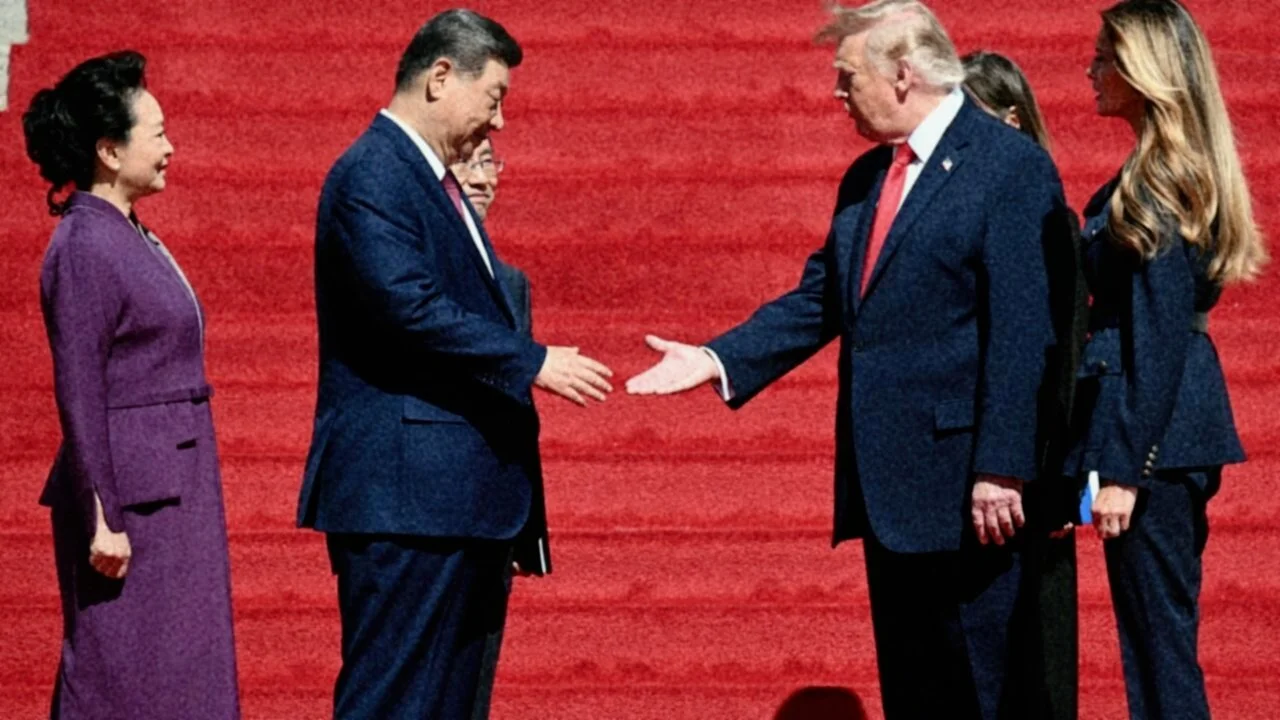
President Xi of China (left); President Trump of the United States (right)
Throughout my childhood, one particular view of the world dominated American foreign policy: liberal internationalism. There are many parts to that tradition, but one of the most important is the idea that countries should organize themselves into alliances based partly on political ideology. Democracies are expected to work most closely with democracies, liberal states with liberal states, and authoritarian governments are often treated first as competitors or threats. This way of thinking made obvious sense during the Cold War, when the world was divided between rival political and economic systems. The problem is that much of that mindset survived long after the Cold War itself ended. We still often judge international relationships by asking whether another country governs itself like we do rather than whether cooperation would actually benefit us.
I think this has created a needlessly restrictive approach to foreign policy. The United States has interests that do not always line up neatly with ideology, and other countries are no different. A government does not have to resemble ours for us to cooperate with it. We already accept this principle selectively. The United States has maintained close relationships with governments that are not liberal democracies when doing so has served economic or security interests. At the same time, we have sometimes treated ideological similarity as if it automatically made another country a good partner. Neither assumption is especially useful. Countries should be judged by what they do, what they want, and whether working with them produces worthwhile results.
China is the clearest example. China is not a liberal democracy, and there are real disputes between Washington and Beijing over Taiwan, trade, technology, security and human rights. Those disagreements should not be ignored. But they also should not prevent cooperation in areas where American and Chinese interests overlap. China is one of the largest economies in the world, one of the most important manufacturing centers, and a major force in global trade, infrastructure and technology. Treating a country of that size as a permanent ideological enemy is not a particularly realistic way to conduct foreign policy. The United States and China do not need to have the same political system in order to trade, negotiate, coordinate on global problems or establish rules that reduce the risk of conflict.
I also think there is a more useful distinction to make than simply separating the world into democracies and authoritarian states. The more important divide may be between governments that are primarily focused on modern development and those that still think in older terms of conquest and territorial expansion. Russia is a good example of the latter. Its war against Ukraine has been based on an older understanding of power in which national strength is demonstrated through control of territory and military domination of neighboring countries. It is difficult to build a stable international relationship with a government that believes changing borders through force is a legitimate way of advancing national interests.
China is different, even if it is not free from territorial disputes or military pressure. Much of China's international influence has been built through trade, manufacturing, investment, infrastructure and access to markets. Its government spends enormous energy thinking about supply chains, ports, technology, energy, industrial capacity and economic growth. That does not make every Chinese policy admirable, and it certainly does not mean the United States should simply accept Chinese demands. It does mean that China is operating in a world where economic relationships matter enormously, and that gives the United States far more room for negotiation and cooperation than exists with a country primarily focused on conquest.
American foreign policy should therefore become less concerned with whether another country belongs to the same ideological category and more concerned with how that country behaves and what kind of relationship is possible. We should cooperate with democratic countries when doing so makes sense, and we should cooperate with other countries when doing so makes sense. We should oppose either when their actions threaten our interests or international stability. Political systems matter, but they should not become a substitute for actually evaluating a country's behaviour.
The United States and China are not going to become the same kind of country, and they do not need to. The question is whether two very different governments can recognize that neither benefits from permanent confrontation. There are obvious areas where cooperation is possible, including trade, climate policy, nuclear proliferation, global development, artificial intelligence, public health and financial stability. A more practical American foreign policy would pursue those areas aggressively while remaining firm where genuine disagreements exist.
The twentieth century encouraged countries to organize the world around competing ideologies. The twenty-first century is increasingly organized around economies, technology, resources and interconnected markets. American foreign policy should recognize that change. We should stop asking first whether another country looks like us and begin asking what kind of relationship actually serves our interests and produces a more stable world.
