
Temporary Loans
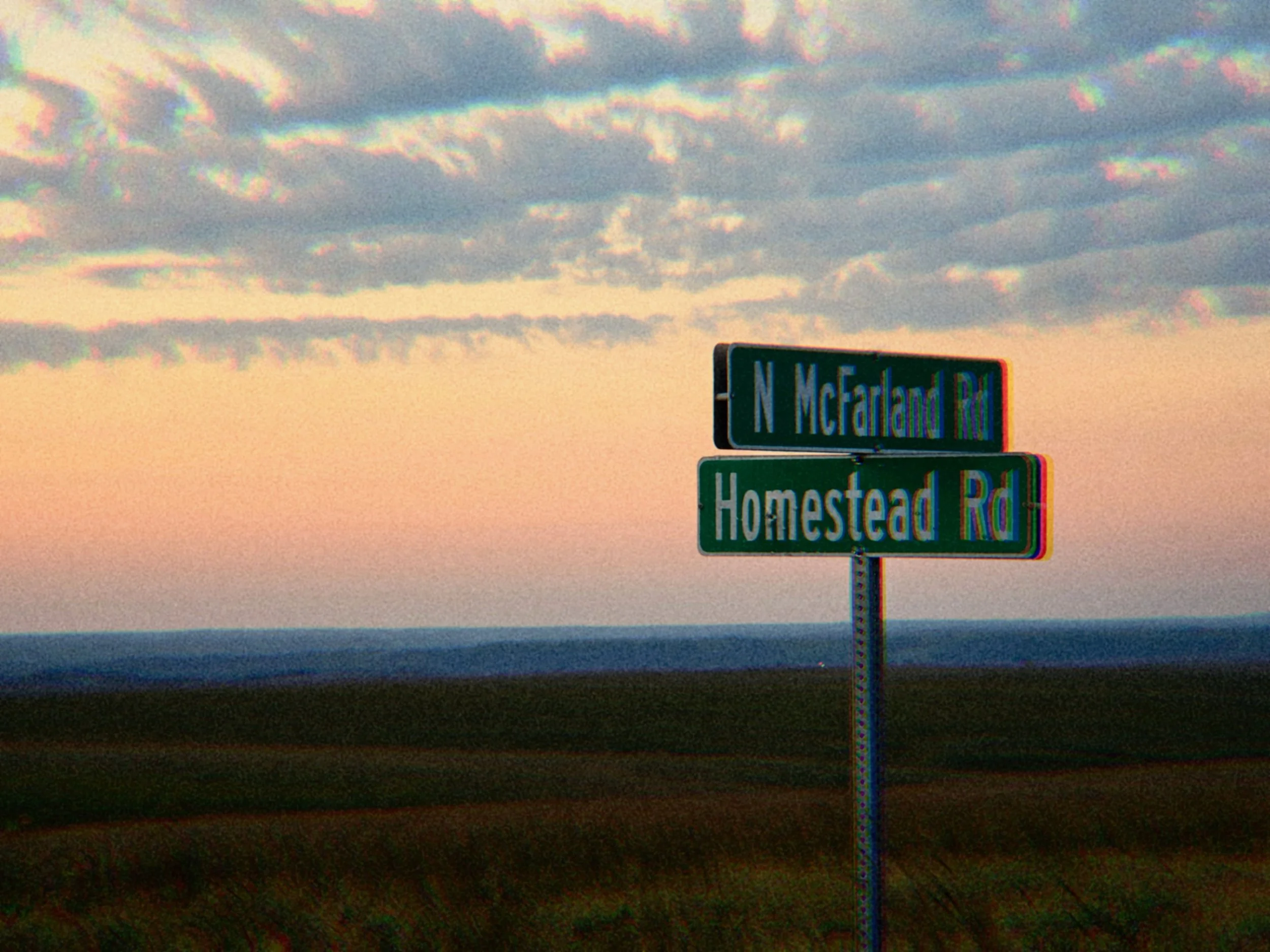
Photo by William Harkleroad
I have always had a strong emotional reaction to seeing homeless people sitting on the side of an intersection asking for food or money. The idea that I, William Harkleroad, am able to drive past in a vehicle I own, maybe holding a drink from Casey's, listening to music, or talking to a friend, while another person is standing outside asking strangers for enough money to get through the day messes with my heart at the deepest level. As a child raised in a Christian household, I was taught to have empathy for homeless people and to offer assistance when I could. That belief being instilled in me during my early years has affected me, and I still remember what my late Papa Joe would say: "It is not your responsibility to guess how they might use the assistance. Your responsibility is to help them."
Now, on the other side of Christianity, having stopped believing in a god, religious doctrine, or an afterlife, I still have the same reaction to someone sleeping rough. The reasoning behind it has simply changed. I do not care because I believe God commands me to, because I expect some reward in heaven, or because I believe that person possesses an eternal soul. I care because, as far as I can tell, that person and I are both extraordinarily complicated arrangements of matter that have somehow become capable of conscious experience for a short period of time. I do not know why I am experiencing consciousness in the first place, and I do not really understand how matter becomes capable of sitting here and wondering about itself. I only know that it has happened, and somehow I am here, able to see things, meet people, listen to music, travel, fall in love, experience grief, and move through the world around me. It is humbling to realize how unevenly those experiences are distributed. Why is it that I have a car, somewhere to live, a family, and the ability to move around freely while someone else does not? I do not know, and I certainly did nothing before being born to earn those things.
That question has increasingly shaped the way I understand life. One belief I have come to accept is that almost nothing is permanent. People change, relationships change, bodies age, cities grow and decline, nations rise and disappear, religions evolve, and the person I am today is not the same person I was ten years ago. Even the atoms that make up my body are not really mine. They existed before me and will continue existing after the arrangement called William Harkleroad eventually comes apart. For a while, they have come together in a way that allows me to experience consciousness, and I have started to think of life as a temporary loan rather than something I possess outright.
I recognize that this conclusion is not the only one available. Plenty of people arrive at impermanence and land somewhere closer to detachment than urgency, the idea that if nothing lasts, nothing carries the weight to demand action from us either. I understand the appeal of that reading. If the person at the intersection tonight is just one flickering configuration among countless others that have come and gone, why should this one moment of cold or hunger matter more than any other passing thing? I do not think that reading is wrong so much as incomplete. It treats impermanence only as a fact about scale, that everything is small against the size of time, when I think it is also a fact about scarcity. If a person only has one pass through consciousness, and no later chapter in which the ledger gets balanced, then whatever happens to them during that pass is the only version of their experience that will ever exist. Nothing about that experience gets rescheduled or refunded later. Impermanence can shrink the philosophical importance of any single life if you are looking at it from far enough away. It also means that up close, where the person is actually standing, there is no later draft. That is the distinction that moves me from equanimity to urgency rather than the other way around, and I will admit it is a choice about where to stand, not a conclusion forced by the premise alone.
What frustrates me is how often human beings seem determined to escape that reality altogether, rather than argue with it the way I just tried to. I have talked with many people about homelessness, poverty, suffering, death, and injustice, and eventually some variation of the same idea appears: this life is not the only one, God is in control, or everything will eventually be made right. I understand why people find comfort in that belief, and I do not pretend to know with certainty that they are wrong. Maybe there is an afterlife or some reality beyond what we can observe. My problem begins when the possibility of another life makes us less disturbed by suffering in this one. If someone spends decades hungry, frightened, lonely, or sleeping outside, the idea that everything may eventually be corrected in eternity does nothing for the person experiencing tonight. Tonight is not a rough draft of some future night. It is the only copy.
In fact, abandoning my belief in an afterlife has made suffering feel more urgent to me, not less. If this really is the only life a person has, then a year spent suffering matters enormously. So does a decade, a childhood, or even an afternoon. We cannot assume that some eternal balance sheet will eventually correct every injustice, and that makes what happens here more important. When I see someone standing at an intersection asking for money, I cannot comfort myself with the idea that some larger system will eventually make everything right. The only reality I know that person possesses is the one occurring in front of me, and if I can make even a small part of that experience better, I think that matters, not because the moment will last, but precisely because it will not.
This is also where I think our demand for permanence creates unnecessary suffering, homelessness included. We regularly expect permanence from things that were never capable of providing it. We want relationships to remain exactly as they were when they made us happiest, people we love never to leave us, our bodies to remain young, our communities to stay familiar, and institutions to preserve the ideas that created them. We also, I think, want the world's arrangement of who has shelter and who does not to feel settled and earned rather than what it actually is, which is largely accidental and constantly shifting. When change happens anyway, whether to a marriage or to a person's housing, we often interpret the change itself as a failure rather than as evidence of how little any of it was ever fixed in place. I do not think there is anything wrong with wanting continuity. I hope the people I love remain in my life, good institutions survive, and tomorrow resembles today closely enough that I can make plans. But there is a difference between hoping something lasts and believing that it must.
That distinction has changed the way I think about religion and doctrine as well. When I was younger, I wanted definite answers about why I existed, what happened after death, what was right, what was wrong, and what everything ultimately meant. I am more comfortable now admitting that I do not know. I do not know why consciousness exists, whether the universe has a purpose, or what, if anything, comes after death. I have found that not knowing is much easier to live with than I once expected. A question does not become less meaningful simply because I cannot solve it, and mystery does not become less beautiful because an institution has failed to explain it.
That is also why I have become suspicious of doctrine when it becomes too rigid. An idea may begin as a sincere attempt to understand something difficult, but over time the explanation can become more important than the experience that created it. Institutions have a similar tendency. They can begin around a genuine moral, spiritual, artistic, or political impulse and eventually become more concerned with preserving themselves than with preserving what originally gave them purpose. I do not think institutions are inherently bad; many are necessary and useful. I do think they become dangerous when continuity turns into self-preservation and self-preservation becomes the highest goal.
The things I would now describe as sacred are usually much simpler. They are found in experience: landscape, music, travel, honest conversation, love, art, curiosity, and the feeling of following a question as far as I can without forcing myself to invent an answer. None of those experiences need to last forever in order to matter. A place can affect me even if I only see it once. A relationship can have been meaningful even if it ends. A piece of music can matter because of what it does in a particular moment. The value of an experience does not depend on its permanence, and in many cases the fact that it cannot be preserved indefinitely is part of what gives it weight.
The same is true of the self. I do not think there is one fixed version of me that must remain intact for my life to make sense. There are versions of myself from years ago that I barely recognize now, and that does not mean they were false. They were real for the time in which they existed. Their beliefs, relationships, fears, ambitions, and assumptions changed because life continued happening. I expect the same thing will happen again. The person I am now will eventually become another earlier version of me.
Maybe that is what life is more than anything else: a process rather than a permanent object. For a short period of time, matter has arranged itself into something capable of awareness, memory, curiosity, attachment, and reflection. I do not know why that happens, but I know that for now it does. That is enough for me to take the experience seriously, and to take seriously the experience of the person on the other side of my car window, who is undergoing the same one-time process I am.
If life were infinite, perhaps there would always be another opportunity, another world in which the imbalance could be corrected. I do not know that we have another world. I know we have this one, and for a short period of time I am here, conscious and capable of experiencing it, and so is the person standing outside asking for help. Neither of us chose the atoms we received, the families we were born into, or the circumstances that placed us on opposite sides of that glass, and neither of us gets a second version of tonight.
I cannot make life permanent, and I no longer think permanence is necessary for life to matter. What matters more to me is whether, during the short period in which I am here, I actually experience it, remain open to change, pay attention to other people, and do what I can to reduce suffering where I encounter it. If this life is a temporary loan, then I would rather use it than spend it waiting for some more permanent reality to begin.
About the author
William Harkleroad is the writer and founder of WillNation, an independent journal covering politics, history, geography, culture, travel, and personal reflection.
